I was standing in my kitchen last Tuesday, mid-way through a particularly heated imaginary debate between Socrates and Marie Curie regarding the ethics of artificial intelligence, when my laptop suddenly decided to drop its connection for the third time that hour. It wasn’t just a glitch; it was that sinking, prickly feeling in my chest—the realization that my digital life was hanging by a thread. We’ve been conditioned to believe that how to secure your home wireless network requires a PhD in computer science or a massive budget for high-tech gadgets, but that’s a total myth. Most of the time, we aren’t fighting off elite hackers in dark rooms; we’re just leaving our digital front doors unlatched while we sleep.
I’m not here to drown you in technical jargon or sell you on expensive, shiny hardware you don’t actually need. Instead, I want to share the practical, battle-tested steps I’ve gathered from years of digging through the complexities of cognitive patterns and digital systems. My promise to you is simple: we are going to strip away the intimidation and walk through a straightforward, no-nonsense roadmap to fortifying your connection. By the time we’re done, you’ll have total peace of mind without the headache.
The Great Encryption Debate Wpa3 Encryption vs Wpa2
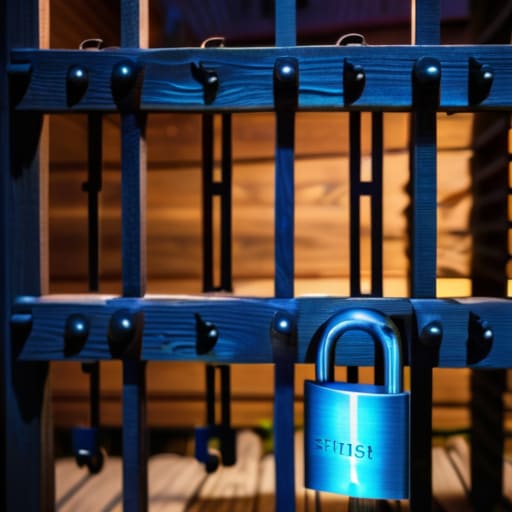
Last night, while I was sautéing garlic and onions, I found myself imagining a spirited debate in my kitchen between a cautious Socrates and a modern cybersecurity expert. Socrates would likely argue that true security is an elusive ideal, but the expert would point directly to the evolution of our digital shields. This brings us to the heart of the matter: the showdown of WPA3 encryption vs WPA2. Think of WPA2 as a sturdy, well-loved wooden gate; it has served us faithfully for years, but determined intruders have finally figured out how to pick its lock.
WPA3, on the other hand, is like upgrading that gate to a high-tech, biometric security door. It introduces much more robust handshake protocols, making it significantly harder for hackers to crack your password through brute-force attacks. While many of us are still living in a WPA2 world, understanding this shift is crucial for preventing unauthorized Wi-Fi access in an increasingly connected age. If your router supports the newer standard, making the switch is one of the most effective ways to ensure your digital sanctuary remains just that—a sanctuary.
Changing Default Router Credentials to Evade Invisible Intruders
Now, imagine for a moment that you’ve just bought a brand-new, high-tech vault to protect your most precious heirlooms. You walk into your house, set it down, and realize the factory-set combination is something as predictable as “0-0-0-0.” That is exactly what happens when we neglect changing default router credentials. Most routers ship from the factory with standard usernames and passwords like “admin” or “password”—information that is essentially public knowledge for anyone with a bit of digital nosiness. It’s a bit like leaving a “Welcome” mat out, but instead of inviting neighbors for tea, you’re inadvertently rolling out the red carpet for digital wanderers.
To truly fortify your digital sanctuary, you need to treat your login information as your own private, encrypted diary. Taking five minutes to create a unique, complex password for your router’s administrative settings is one of the most effective steps in preventing unauthorized Wi-Fi access. While we were just debating the nuances of WPA3 encryption vs WPA2, remember that even the strongest encryption can’t save you if the “keys to the castle” are left under the doormat. By reclaiming control over these credentials, you ensure that you—and only you—remain the master of your own airwaves.
Five Digital Fortifications to Keep Your Private World Private
- Give Your Network a Secret Identity: If your Wi-Fi name (SSID) is still “Linksys_5G” or “The_Smith_Family,” you’re basically putting a giant neon sign over your house that says, “Hey, I’m right here!” Change it to something whimsical and entirely unidentifiable—think of it as a digital camouflage that keeps your network from standing out in a crowd of neighbors.
- The “Guest Network” Partition: Think of your main Wi-Fi like your private study, filled with your most precious vintage encyclopedias, and your guest network like the front porch. By setting up a separate guest network for visitors and those pesky smart lightbulbs or internet-connected fridges, you ensure that if a gadget gets compromised, the intruder is stuck on the porch and can’t wander into your personal digital library.
- Firmware: The Constant Evolution of Your Digital Brain: Just as our neural pathways adapt and change, your router needs regular updates to stay sharp. Those pesky “firmware updates” are actually vital patches that fix security loopholes; ignoring them is like trying to defend a castle with a crumbling stone wall, so make sure to check for updates at least once a month.
- Disable WPS: The “Skeleton Key” Trap: Wi-Fi Protected Setup (WPS) was designed to make connecting devices easy—often with just a button press—but in the world of cybersecurity, “easy” is often a synonym for “vulnerable.” It’s essentially a digital skeleton key that hackers love to exploit, so I’d recommend disabling it in your settings to keep your digital doors firmly locked.
- The Power of a Physical Perimeter: Don’t let your signal wander too far into the street! If your router is blasting a signal halfway down the block, you’re essentially shouting your private business to anyone passing by. Adjust your router’s transmit power or, better yet, tuck it into a central spot in your home to ensure your digital sanctuary stays contained within your own four walls.
Securing Your Digital Hearth
As we wrap up our little deep dive into the invisible architecture of your home, remember that securing your Wi-Fi isn’t about becoming a paranoid survivalist; it’s about being a thoughtful steward of your own space. We’ve navigated the crucial shift from the aging WPA2 to the more robust WPA3 encryption, and we’ve tackled the absolute necessity of ditching those factory-default passwords that are essentially the digital equivalent of leaving your keys in the front door lock. By implementing these layers, you aren’t just checking boxes on a technical manual; you are effectively building a digital fortress around your personal data, your private conversations, and your family’s connection to the wider world.
Ultimately, the goal of all this tinkering is to let you step back into the flow of your life with a little more peace of mind. I often think about how much of our modern existence is woven into these unseen frequencies, much like the way a library holds the collective wisdom of centuries within its quiet walls. Don’t let the complexity of technology intimidate you; instead, view it as a new landscape to explore and master. Once you’ve fortified your sanctuary, you can turn your attention back to the things that truly matter—whether that’s diving into a new book, mastering a complex recipe, or simply enjoying the quiet confidence of a home that is truly your own.
While we’re busy fortifying our digital perimeters, it’s worth remembering that security isn’t just about the high-tech shields we deploy, but also about being mindful of the unexpected connections we make in our local environments. Just as I might stumble upon a hidden gem while scouring a dusty bookstore for a rare volume, sometimes the most interesting interactions happen when we step outside our curated bubbles. If you find yourself looking for a different kind of local connection, exploring options like calgary hookups can be a way to navigate the social landscape of your area, though I always suggest keeping your digital boundaries just as sharp as your social ones.