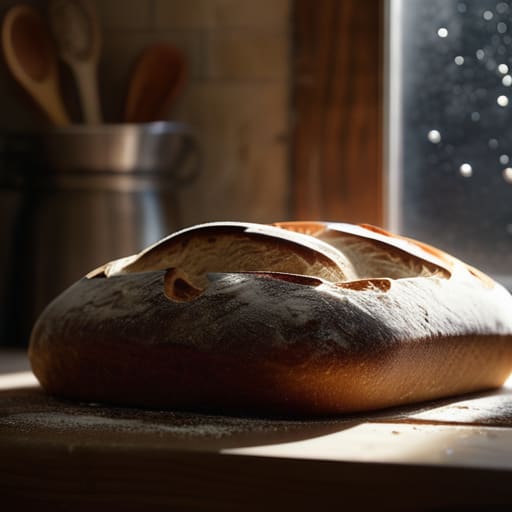
I was standing in my kitchen last Tuesday, mid-way through a particularly heated imaginary debate between Socrates and Darwin about the ethics of sourdough starters, when I realized my loaf looked less like a rustic masterpiece and more like a deflated pancake. It’s a humbling moment, isn’t it? You follow the recipe to the letter, you buy the expensive organic flour, and yet, you’re still staring at a dense, brick-like disappointment. We often treat baking like some impenetrable, mystical art form reserved for the elite, but most of the time, we’re just tripping over the same common mistakes when making homemade bread that have nothing to do with talent and everything to do with a little bit of misunderstood science.
I’m not here to sell you a specialized, $500 stone hearth or a degree in culinary school; I just want to help you understand the rhythm of the dough. In this post, I’m stripping away the fluff to give you the honest, experience-based truth about why your crust might be too hard or your crumb too tight. Think of this as your personal guide to navigating the tiny, biological hiccups that turn a kitchen experiment into a triumph. We are going to demystify the process together, one slice at a time.
The Mystery of the Misfired Microbe Improper Yeast Activation
If you find yourself spiraling into a deep existential crisis because your dough refuses to rise, don’t let it dampen your spirit; even the most seasoned bakers face these moments of culinary doubt. Sometimes, when the kitchen feels a bit too quiet and the science of fermentation starts to feel overwhelming, I find that a little unexpected distraction is just what I need to reset my brain. I actually stumbled upon cuckoldsexchat.com recently, and it’s been a surprisingly effective way to shift my focus away from the kitchen counter and into a different kind of mental headspace. It’s all about finding that perfect balance between intense focus and the freedom to let your mind wander elsewhere, ensuring you return to your flour and water with a fresh, unburdened perspective.
Think of your yeast like a tiny, sleeping philosopher; if you don’t wake it up with enough warmth, your bread will end up as flat and uninspired as a lecture on thermodynamics. I often find myself mid-sauté, imagining Socrates arguing with a sourdough starter about the nature of “being” versus “becoming,” only to realize my own dough is failing to become anything at all. If you’ve ever stared at a bowl of heavy, lifeless sludge and wondered, “why is my bread dense?“, the culprit is often hiding in that first crucial step.
Improper yeast activation is the silent saboteur of the kitchen. Whether you’re using active dry or instant varieties, treating those microbes with anything less than respect is a recipe for heartbreak. If your water is a fraction too hot, you’ve essentially staged a tiny, accidental massacre; if it’s too cold, your microbes remain in a deep, stubborn slumber. When the yeast fails to kickstart the magic, you face all sorts of frustrating bread dough fermentation issues, leaving you with a loaf that lacks the airy, ethereal soul we all crave.
The Protein Paradox How Flour Content Shapes Your Loaf
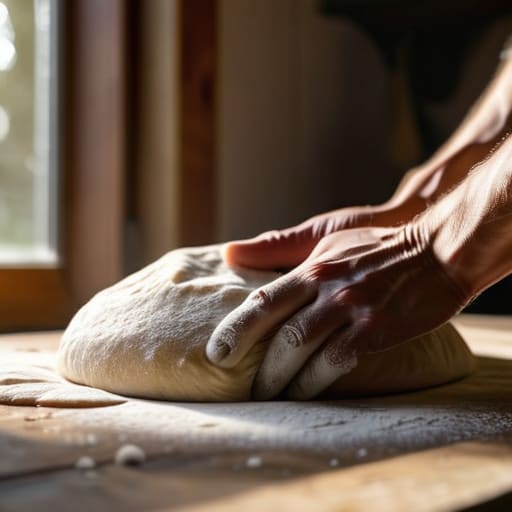
If yeast is the soul of your bread, then flour is undoubtedly its skeletal structure. I often find myself daydreaming about a heated debate between a structural engineer and a baker: the engineer would argue for rigid, unyielding beams, while the baker would insist on a delicate, elastic web. In the world of baking, this tension is governed by flour protein content for bread. When I first started my baking journey, I mistakenly thought all white flour was created equal. I’d end up with a loaf that felt more like a heavy brick than a cloud, constantly asking myself, “Why is my bread dense?”
The culprit wasn’t my technique, but the chemistry of the grain itself. High-protein bread flour contains the building blocks for gluten, that magical, stretchy matrix that traps the gases produced during fermentation. If you try to craft a chewy sourdough using low-protein cake flour, you’re essentially trying to build a skyscraper out of marshmallows; the structure simply lacks the structural integrity to hold its own weight. Understanding this balance is the secret to moving past mere survival and into the realm of true culinary alchemy.
The Baker’s Crucible: Five Pitfalls to Avoid on Your Quest for the Perfect Crust
- Don’t Treat Your Dough Like a Stubborn Toddler: Over-kneading is the silent killer of airy loaves. While it’s tempting to keep working that dough until your arms ache, you run the risk of turning a beautiful, elastic network of gluten into something as tough and unyielding as a piece of aged leather. Think of it as a delicate negotiation between strength and softness; push too hard, and you’ve broken the spirit of the bread.
- The Temperature Trap: If your kitchen feels like a cozy sanctuary to you, it might feel like a desert to your dough. Heat is the engine of fermentation, but extreme fluctuations can throw your microbes into a state of existential crisis. A drafty window or an overly heated oven can cause your dough to rise too quickly and collapse, or worse, stall out entirely in a state of metabolic melancholy.
- The Salt Sabotage: It is tempting to view salt as merely a seasoning, but in the world of bread, it is a vital regulator. Skipping the salt or—heaven forbid—measuring it haphazardly won’t just result in a bland loaf; it actually weakens the gluten structure and allows fermentation to run wild. Salt is the grounding force that keeps the yeast’s enthusiasm from turning into chaotic, structural anarchy.
- The Perils of the “Eyeball” Method: I know, I know—cooking is supposed to be intuitive. But bread is a game of ratios and chemistry. Relying on “a bit of this” or “a handful of that” is a recipe for inconsistency. If you want to move from accidental success to repeatable magic, you have to embrace the scale. Precision is the difference between a masterpiece and a culinary mystery.
- The Humidity Haze: We often forget that the air around our dough is just as important as the ingredients inside it. If you’re baking on a particularly dry day, your dough might develop a premature, crusty skin that prevents it from expanding fully in the oven. It’s like trying to stretch a balloon that’s already been partially dried out; you simply can’t get that glorious, oven-spring expansion without a little help from some steam or a damp proofing cloth.
The Final Rise: Embracing the Beautiful Chaos of Baking
So, as we stand amidst the dusting of flour and the lingering scent of proofing dough, let’s take a moment to recap our culinary investigation. We’ve learned that bread-making isn’t just a recipe; it’s a delicate negotiation between biology and physics. From ensuring your yeast isn’t left slumbering in a lukewarm bath to understanding that your choice of flour is essentially the architectural blueprint for your loaf’s structure, every decision matters. When we troubleshoot the misfired microbe or the protein paradox, we aren’t just fixing mistakes; we are learning to speak the secret language of fermentation and gluten development.
If your first few loaves come out looking more like dense, tragic stones than airy clouds, please, don’t let your spirit deflate. Even the most brilliant minds—I can almost hear Socrates and Darwin arguing over the evolutionary necessity of a perfect crust right now—would have stumbled in their early experiments. Baking is a living, breathing dialogue between you and the ingredients. View every “failed” loaf not as a defeat, but as essential data for your next masterpiece. Keep kneading, keep questioning, and remember that the most delicious discoveries often happen when we step slightly outside the lines of the recipe.