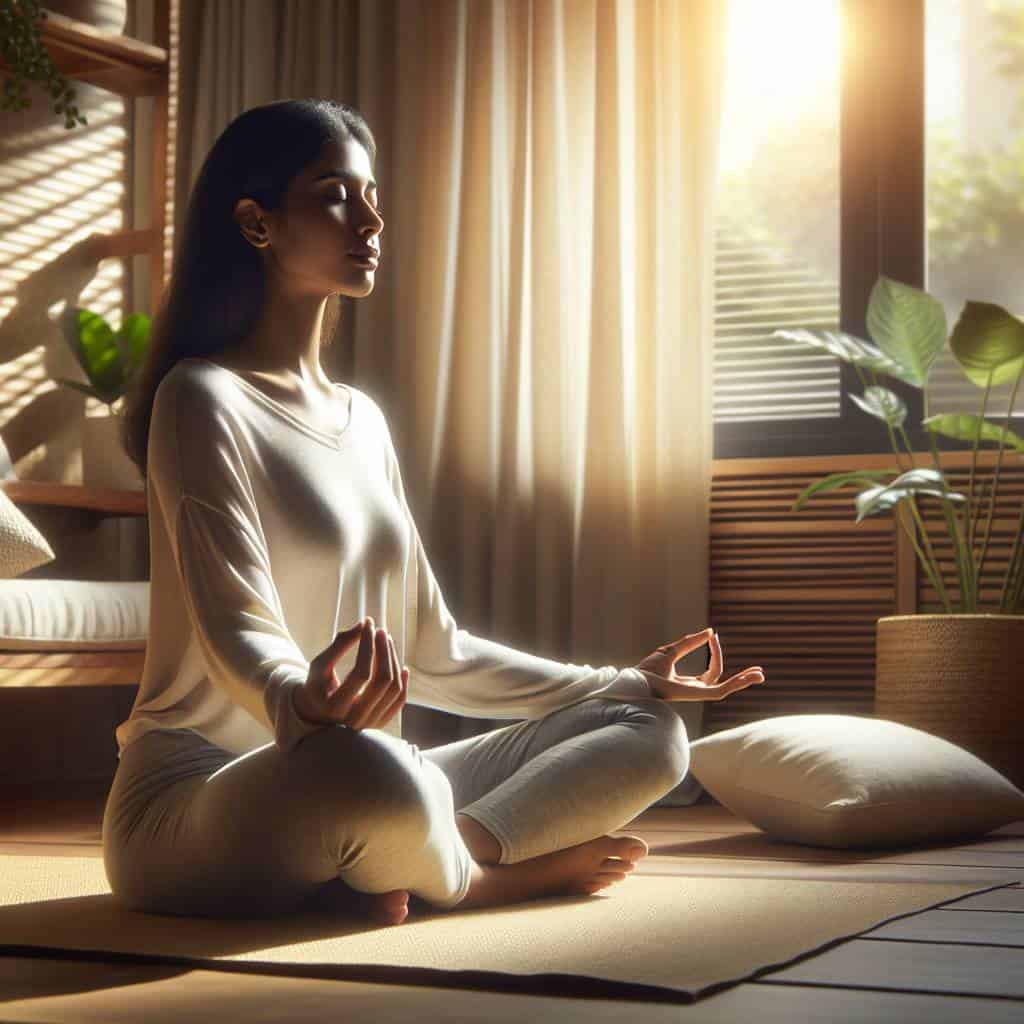
Last night, while I was sautéing garlic and imagining a heated debate between Socrates and Darwin over the merits of evolutionary instinct versus pure reason, my mind decided to take a sudden, uninvited detour into a mental spreadsheet of my unread emails. It was a jarring reminder of why so many people fail when they try to figure out how to start a daily meditation practice. We’ve been sold this glossy, aesthetic lie that mindfulness requires a $100 linen cushion, a mountain retreat, and the ability to achieve a state of total, blissful emptiness—as if our brains were designed to be blank slates rather than the beautifully chaotic, hyper-active engines they actually are.
I’m not here to sell you on a lifestyle brand or a mystical shortcut to enlightenment. Instead, I want to offer you a much more grounded approach, rooted in what I’ve learned through my studies in cognitive science and my own messy attempts at stillness. I promise to share a practical, no-nonsense roadmap that treats your wandering mind with curiosity rather than judgment. We’re going to strip away the performative perfection and focus on building a sustainable ritual that actually fits into your real, cluttered, wonderful life.
Curating Your Sanctuary Creating a Meditation Space at Home
Now, before we dive into the actual breathing, we need to talk about your surroundings. I often find myself imagining Socrates and Marie Curie having a heated debate in my kitchen about whether a cluttered room leads to a cluttered mind—Socrates would likely argue that the soul requires order, while Curie might just want more space for her specimens! But in all seriousness, creating a meditation space at home doesn’t require a dedicated Zen room or an expensive mountain retreat. It’s really about finding a small, predictable corner where your nervous system can finally take a hint and relax.
Think of this space as a physical cue for your brain. Whether it’s a specific velvet cushion, a particular scented candle, or just a corner of your rug where the sunlight hits just right, you are building an anchor. When you enter this zone, you’re signaling to your subconscious that the frantic pace of the day is officially on pause. By establishing this little sanctuary, you’ll find that exploring various meditation techniques for beginners becomes much easier because your environment is already doing half the heavy lifting for you.
The Science of Calm Exploring Mindfulness Meditation Benefits

Now, I know what you’re thinking: “Lane, is this just more wellness fluff, or is there actually something happening under the hood?” As someone with a background in cognitive science, I can promise you it’s the latter. When we dive into the mindfulness meditation benefits, we aren’t just talking about a fleeting sense of peace; we are talking about actual neuroplasticity. Imagine your brain as a lush, sprawling garden. Without mindfulness, the weeds of stress and reactive thought can quickly take over. However, consistent practice acts like a gentle pruning, strengthening the prefrontal cortex—the seat of our decision-making and emotional regulation—while simultaneously quieting the amygdala, that tiny, frantic alarm bell that keeps us in a state of constant fight-or-flight.
It’s a bit like a whimsical debate I had in my head last night while sautéing mushrooms: I imagined Immanuel Kant arguing that mindfulness is the ultimate way to structure our internal perception, while Darwin chimed in, insisting it’s simply a survival mechanism to keep our nervous systems from redlining. In reality, using meditation for stress relief is a biological recalibration. By training your attention, you are essentially teaching your nervous system how to shift from a state of high-alert survival back into a state of restorative calm.
Five Gentle Anchors for Your Meditative Journey
- Start with “Micro-Moments” rather than Marathons. While my mind often wanders toward the grand, sweeping gestures of epic philosophers, the reality of cognitive habit-building is much more modest. Don’t feel pressured to sit for forty minutes; instead, try just three to five minutes. Think of it as inviting a tiny, polite guest into your day rather than hosting a massive, overwhelming banquet.
- Anchor Your Practice to an Existing Ritual. In cognitive science, we talk a lot about “habit stacking.” If you want to make meditation stick, tether it to something you already do without thinking—like the first sip of your morning coffee or the moment you set your keys down after work. It turns a new, daunting task into a natural extension of your current rhythm.
- Embrace the “Wandering Mind” Without Judgment. I often imagine Socrates and Darwin having a heated debate over my stove about whether a wandering mind is a failure of discipline or a triumph of curiosity. The truth? It’s both. When your thoughts drift to your grocery list or a conversation from three years ago, don’t scold yourself. Simply notice the drift, label it “thinking,” and gently guide yourself back.
- Curate a Sensory Cue. Just as I find comfort in the tactile weight of a vintage encyclopedia, your brain loves sensory signals that say, “It is time to be still.” This could be lighting a specific sandalwood candle, putting on a particular pair of soft socks, or even a specific piece of ambient music. You are essentially training your nervous system to recognize these cues as a signal to downshift.
- Prioritize Consistency Over Complexity. It is far better to meditate for two minutes every single day than to do one hour-long session once a week and then forget about it for a month. We are building neural pathways here, and those pathways crave the steady, rhythmic beat of repetition. Think of it as tending a small garden; it’s the daily watering, not the occasional monsoon, that makes things grow.
The Gentle Art of Beginning
As we wrap up our little exploration into the world of stillness, I hope you see that starting a meditation practice isn’t about achieving some impossible state of Zen perfection. It’s about the small, intentional steps we’ve discussed: from carving out a dedicated sanctuary in your home that feels like a warm hug, to understanding the fascinating cognitive shifts that happen when we simply choose to observe our thoughts without judgment. Whether you are leaning into the science of neuroplasticity or just trying to find a moment of peace amidst the chaos, remember that the goal is simply to show up. It is the consistent, gentle repetition of these moments that truly begins to reshape our internal landscape.
I often find myself imagining what Socrates might have said if he had a modern meditation cushion—would he argue that the unexamined life is truly impossible to live without a bit of quietude? Perhaps. But more importantly, I want you to remember that your journey doesn’t need to be a grand, sweeping saga; it can be a series of quiet, whimsical experiments with your own consciousness. Don’t be afraid to stumble, to wander, or to find your mind racing like a caffeinated philosopher during a debate. Just keep coming back to the breath. You aren’t just sitting in silence; you are cultivating a lifelong friendship with your own mind, and that is a beautiful adventure worth taking.
As you begin to navigate these early stages of stillness, I’ve found that having a gentle, structured framework can make all the difference in preventing that “what am I even doing?” feeling from creeping in. It’s much like trying to organize a chaotic library without a cataloging system; you need a bit of a roadmap to feel truly grounded. If you find yourself craving a more spontaneous or diverse way to connect with different energies and perspectives while you’re exploring new horizons, you might find some unexpected inspiration through calgary sex chat, which can offer a unique window into human connection and raw expression. Integrating these little moments of authentic engagement into your broader journey of self-discovery can help ensure your practice remains a vibrant, living part of your life rather than just another item on a checklist.